
Hi, I'm Treya 👋
I make complex systems legible.
I'm a Product Designer on Couchbase's Capella platform, where the hard problems live in inheritance models, role scoping, and billing states, not on the surface. I design the structure first, so the screens can stay simple.
Work in progress: I'm rebuilding this site around new work. Full case studies are coming; the summaries are below.
Systems work, told properly.
Everything below is on Couchbase Capella, a cloud database platform. Happy to walk you through any of it: request a walkthrough.
Observability
Platform-wide alerting built on three-level inheritance across nine RBAC roles. Modelled before any screen existed; the design reversed four times as constraints moved.
Streaming operational cluster metrics and logs to tools like Datadog and New Relic, with cost-aware filtering by cluster, service and metric. Authored the phasing framework that tracked scope reversals openly.
In-console logs for App Services teams without a third-party tool. Every query costs the platform money, so filters apply on an explicit action and downloads are capped.
AI infrastructure
Pay-per-token model deployment alongside provisioned GPUs. An interactive prototype replaced a planned details screen with an expandable row and removed one engineering milestone from a 58-ticket plan.
Scoped tool and data access for AI agents. Built the UX in the production codebase with AI-assisted development, raised the PR, and iterated by commit to about 95% final before handoff.
Shipped
Three competing layouts became one information hierarchy: config checks from a 3-click drill-down to 0 to 1 clicks, with 100% data parity.
Full setup, verification and recovery journey, including self-recovery after a lost device.
Capella's first self-guided onboarding, adopted by about 125 first-time free-tier users in its first months.
Earlier
Performance, security, backup and cost signals unified into one hierarchical score with recommendations.
Concept · HackathonA nine-week responsive design pilot and the evidence-backed reversal of the mobile-first playbook.
Shipped · Internship pilotIndependent research into how OCD support networks break down, grounded in interviews with 37 people worldwide.
Research · Accepted & presentedFive principles I keep coming back to.
- 01
The model before the UI.
The hardest problems (inheritance hierarchies, role scoping, cost per query) are won or lost at the conceptual-model level. On alerting, that meant modelling three levels and nine roles before a single screen existed, and catching an override contradiction that would have forced an engineering rebuild. Align on how the system thinks first.
- 02
The prototype is the spec.
I hand engineering working software, not a picture of it: interactive HTML with every role view and every state, and increasingly the production codebase itself. On the managed MCP server, that meant raising the PR and iterating by commit until the UX was about 95% final before handoff.
- 03
Constraints in early, not backfilled.
Real components, real data shapes, real cost, from day one. Log Explorer's entire interaction model follows from one fact: every query costs the platform money. So filters apply on an explicit action, refresh is manual, and downloads are capped. Retrofitting reality always costs more.
- 04
Surface the fork, hand it to its owner.
When a genuine open question appears, I make it visible inside the prototype, with its source and whose call it is, rather than quietly designing over it. On Log Explorer, asking what happens to collected logs when an App Service is turned off produced a settled answer in three days, long before QA would have found it.
- 05
Craft includes the process.
Severity-graded review docs so stakeholders can comment on screens. Phasing docs when nobody else writes them. Decision logs that trace every reversal, so the next person can see why. I prototype with AI-assisted development, and I'm still learning to read all of the code I ship. I'd rather say that plainly than pretend otherwise.
Where I've worked.
Couchbase Product Designer Jan 2025 - Present
- Own end-to-end design across observability, AI infrastructure, security and billing on Capella
- Modelled the platform-wide alert management system: three-level inheritance across nine RBAC roles
- Led UX for OpenTelemetry export and in-console Log Explorer, both shaped by cost and noise constraints
- Designed the serverless model service and managed MCP server; built the MCP UX in the production codebase and raised the PR
- Cut cluster configuration checks from 3 clicks to 0 to 1 with 100% data parity; cut handoff rework from 5-6 iterations to 2
Couchbase Product Design Intern Jul 2024 - Jan 2025
- Improved Day 0 cluster creation: node/service configuration, summaries, review and validation flows
- Contributed to top-navigation optimization, the modal-to-side-sheet conversion, and design-system consistency
Sanspots Investments UX Design Intern Jan 2024 - Jun 2024
- Led a full website redesign as the sole designer, across stakeholders in 7 departments
- Conducted 25 user interviews and usability tests to ground design decisions
eQ Technologic UX Design Intern May 2023 - Jul 2023
- Ran the responsive design pilot for eQube BI: breakpoints from real client device data, desktop-first
- Contributed to an approximately 15% increase in cross-device engagement; delivered ~63 mockups and parameter documentation
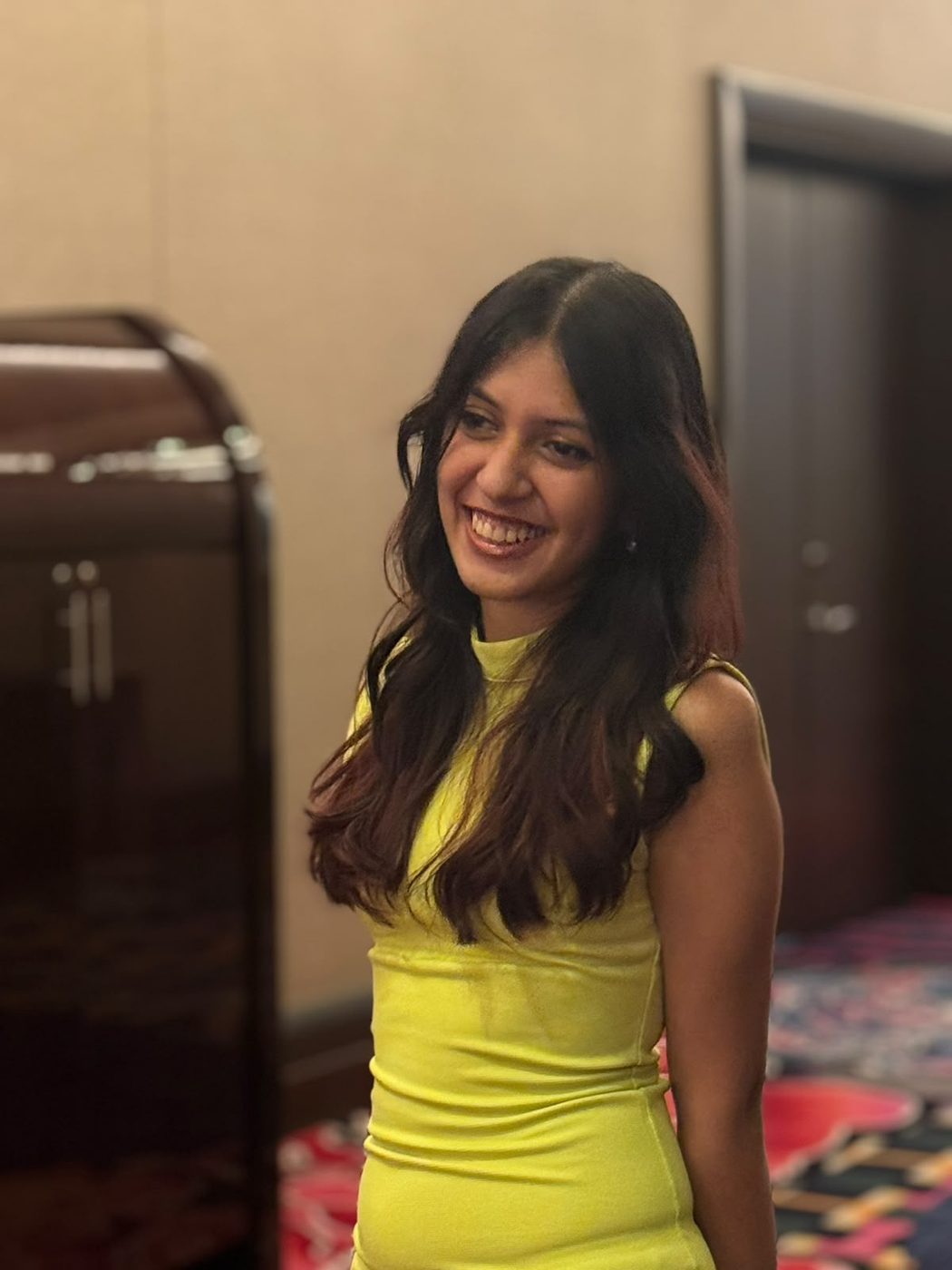
I came to Couchbase as a design intern and grew into owning some of Capella's most intricate surfaces: billing, security, alerts, AI features. Learning the product from the inside first shaped how I design: I care about how a system actually behaves, not just how its screens look.
Craft matters to me at every layer: the conceptual model, the interaction detail, and the process itself. I build my own AI-assisted design tooling: custom skills that enforce my design system during handoff, so quality is built into the workflow rather than left to chance.
Away from work, I travel every chance I get. New places do for me what good research does: they replace assumptions with observations.